
Agriculture & food
Tea Processing Conveyors for CTC and Orthodox Factories
Tea processing conveyors carry green leaf and made tea from receiving and withering through rolling, oxidation, drying, sorting and packing, with gentle handling that protects leaf quality and reduces manual carrying.
- Leaf to packing
- Food-grade belts
- Inclined & feeder conveyors
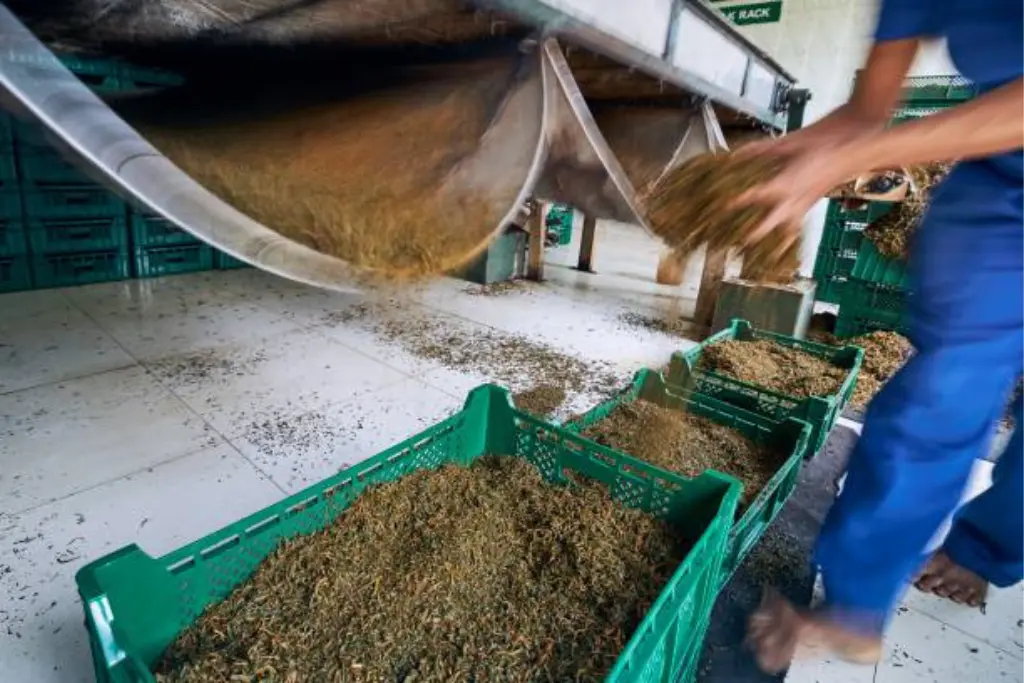
How tea processing conveyors support the factory
Tea manufacture is a chain of timed steps. Freshly plucked leaf must be withered, rolled or cut, oxidised and dried within a set window, and any delay or rough handling shows up in the cup. Moving leaf by hand between machines adds both delay and damage.
Conveyors keep leaf moving at a controlled rate from one machine to the next. They feed rolling and CTC machines evenly, carry leaf into dryers, and move made tea through sorting and packing with less spillage and less handling by workers.
EKA builds belt conveyors with food-grade PU or PVC belts for leaf contact, inclined conveyors for transfers between machines and levels, and roller conveyors for packed chests and sacks.

Conveyor types used in tea factories
Belt conveyors
Carry green leaf and made tea in a continuous, controlled flow between processing machines.
Inclined conveyors
Lift leaf to withering troughs, rolling machines or dryer feeds, saving floor space and manual lifting.
How it works
Tea processing stages and conveyor duties
Stages apply to both CTC and orthodox manufacture, with machines varying between the two.
Green leaf receiving
Leaf arriving from the garden in bags or vehicles is weighed and conveyed to the withering area with minimal handling.
Withering
Conveyors and spreaders help load leaf onto withering troughs, and collect withered leaf for the next stage.
Rolling or CTC
Withered leaf is fed evenly into rotorvanes, CTC machines or orthodox rollers, and passed between machines in series.
Oxidation (fermentation)
Cut or rolled leaf is spread on continuous fermenting machines or trays for controlled oxidation, which develops colour and flavour.
Drying
Oxidised leaf is fed to the dryer at a steady rate so moisture is removed evenly.
Sorting, grading and packing
Made tea is conveyed through fibre extraction and grading, then packed into chests, sacks or packets and dispatched.
Specifying a tea factory conveyor
Points to agree before ordering.
| Item | Recommendation | Why it matters |
|---|---|---|
| Belt material | Food-grade PU or PVC for leaf contact | Clean, odour-free surface for a food product |
| Belt surface | Plain, or cleated for inclines | Wet leaf slides back on steep plain belts |
| Frame | SS for leaf contact areas; powder-coated MS elsewhere | Humidity during withering and oxidation |
| Speed control | Variable speed (VFD) | Match feed rate to each machine's capacity |
| Width and edges | Matched to machine inlets; side guides | Prevents spillage and uneven feeding |
Benefits for tea producers
Leaf quality protection
Low-contact, gentle conveying reduces bruising and breakage before the intended rolling stage.
Even machine feeding
A steady feed rate helps rollers, CTC machines and dryers give a consistent result.
Hygienic handling
Easy-to-clean conveyors reduce contact with hands, floors and baskets.
Labour savings
Fewer workers are needed to carry leaf and made tea between stages.
Faster processing
Leaf moves between stages without waiting, which helps keep timing under control.
Keeping tea conveyors clean and reliable
- Clean daily: leaf juice and fine particles build up on belts and pulleys; regular cleaning prevents taints and belt mistracking.
- Check tracking: a belt running off-centre spills leaf and wears its edges; adjust tracking early.
- Prepare for peak flush: service belts, bearings and drives before the main plucking season.
- Heat near dryers: tell us if a conveyor runs close to a dryer outlet so we specify suitable belts and components.

Recommended EKA conveyors for tea factories
Get an accurate quote
What to send us for a quote
- CTC, orthodox or green tea manufacture
- Green leaf or made tea throughput per hour
- Machines to be connected, with inlet and outlet heights
- Factory layout showing withering, rolling, drying and sorting areas
- Packing formats: chests, sacks or packets
- Power supply and speed control needs
Talk to a conveyor specialist
Send your requirement, get a clear answer
Share a photo, sketch or a few numbers. We reply within one working day.
- Call+91 93640 87778
- WhatsAppChat with us
- Emailcontact@ekaconveyors.com
FAQs
Frequently Asked Questions
Quick answers about tea processing.
Which conveyor belt is used for tea leaf?
Food-grade PU or PVC belts are used where green leaf or made tea is in contact with the belt. They are smooth, easy to clean and do not taint the product.
Can you design conveyors for an existing CTC line?
Yes. Share the inlet and outlet heights and capacities of your rotorvane, CTC machines and dryer, and we will design feed and transfer conveyors to fit.
How steep can a tea leaf conveyor be?
Moist leaf tends to slide back on steep plain belts, so inclines usually use cleated belts. The exact angle depends on the leaf condition and belt surface, which we confirm during design.
Do conveyors damage tea leaf?
Properly set conveyors handle leaf more gently than baskets and manual transfers. Low drop heights and controlled speeds keep damage to a minimum before rolling.
Are conveyors suitable for small tea factories?
Yes. Even a few conveyors at receiving, dryer feed and packing can save significant labour. We size the system to your factory's output.
What maintenance do tea conveyors need?
Daily cleaning, regular checks of belt tracking and tension, and servicing of bearings and drives before the peak season.
Next step
Improve leaf flow in your tea factory
Send us your manufacture type, throughput and machine layout, and we will propose conveyors from leaf receiving to packing.
Real people, real answers. We reply within one working day.