Mining guide
How to Choose a Conveyor Belt for Mining: Key Selection Factors
Choosing a conveyor belt for mining means matching the belt to your material, tonnage, route and site conditions. This guide walks through each selection factor and what it means for belt width, strength and covers.
What factors decide which conveyor belt to use in mining?
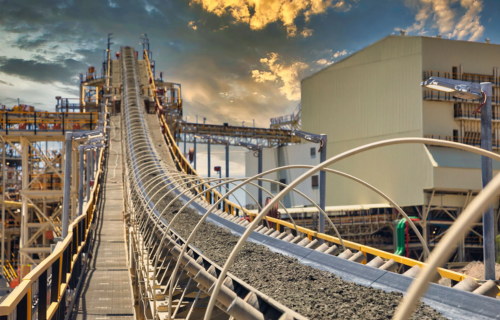
To choose a conveyor belt for mining, consider five groups of factors: the material (abrasiveness, lump size, bulk density, moisture, temperature), the required capacity (tonnes per hour, belt width and speed), the tension and strength needed for the conveyor's length and lift, the environment (underground or surface, dust, water, heat) and maintenance (how the belt will be spliced and repaired).
This guide focuses on the selection process. For a description of each belt construction, see our guide to mining conveyor belt types, and browse our rubber conveyor belts.
Material characteristics and what they mean for the belt
| Property | Why it matters | Belt implication |
|---|---|---|
| Abrasiveness | Hard, sharp material wears covers quickly | Abrasion-resistant grade, thicker top cover |
| Lump size | Large lumps cut covers and need space on the belt | Wider belt, thicker cover, impact idlers |
| Bulk density | Heavier material raises belt tension and idler load | Higher belt rating, closer idler spacing |
| Moisture | Wet, sticky material slips on inclines and causes carryback | Lower incline or chevron profile, good cleaning |
| Temperature | Hot material hardens and cracks normal rubber | Heat-resistant cover grade |
| Oil content | Oils swell and soften standard rubber | Oil-resistant cover grade |
Capacity: belt width, speed and trough angle
Capacity depends on the cross-section of material on the belt and the belt speed. A wider belt or deeper trough carries more per metre; a faster belt carries more per hour, but increases wear at loading points and dust at transfers.
Lump size and belt width
A common rule of thumb is that the largest lump should not exceed about one-third of the belt width when lumps are mixed with fines, and about one-fifth when the load is mostly large lumps. Oversized lumps cause spillage and damage skirting.
Speed
Choose speed to suit the material: fine, dusty or fragile material usually runs slower, while free-flowing sized material can run faster. Your conveyor designer will balance width and speed against cost and wear.
Belt strength and tension
The belt must be strong enough to carry the maximum working tension — the highest pull it sees, usually at start-up under full load — with a safety margin. Tension rises with conveyor length, lift, load and friction. Designers divide the maximum tension by belt width and multiply by a safety factor to find the minimum rating, then choose a carcass (for example EP fabric or steel cord) that meets it. Our article on conveyor safety factors explains the belt safety factor in more detail.
The belt also needs enough load support to span the gaps between idlers without sagging and enough flexibility to trough properly and wrap the pulleys used.
Environmental conditions in mining
Underground
Fire-resistant, anti-static belts are required in underground coal; confirm the applicable standard and approvals.
Dust and spillage
Good skirting, sealed transfers and covers protect the belt and reduce clean-up.
Water and humidity
Wet conditions reduce grip on the drive pulley and need lagging and corrosion protection.
Heat
Hot material or high ambient temperatures call for heat-resistant covers.
Rough terrain
Long overland routes with curves and slopes need careful tension and tracking design.
Splicing and maintenance
| Joint type | Pros | Cons |
|---|---|---|
| Hot vulcanised | Strongest, smooth joint; suits high tension | Needs press, trained crew and curing time |
| Cold bonded | No press needed; good for repairs | Lower strength than hot splice; curing time |
| Mechanical fasteners | Fast to fit; ideal for emergency repair | Lower strength; can leak fines; wears scrapers |
Data to send for a mining belt recommendation
- Material, maximum lump size, bulk density, moisture and temperature
- Required capacity in tonnes per hour
- Conveyor length, lift or fall, and incline angle
- Belt width and speed, if fixed
- Pulley diameters and idler trough angle
- Location: underground or surface; any fire-resistance requirement
- Preferred joint type
Key takeaways
- Start with the material: abrasiveness, lump size, density, moisture and heat
- Size width and speed to capacity and lump size
- Choose belt rating from maximum tension with a safety factor
- Match cover grade and fire resistance to the environment
- Plan how the belt will be spliced and repaired
Talk to a conveyor specialist
Send your requirement, get a clear answer
Share a photo, sketch or a few numbers. We reply within one working day.
- Call+91 93640 87778
- WhatsAppChat with us
- Emailcontact@ekaconveyors.com
FAQs
Frequently Asked Questions
Quick answers about mining belt selection.
How thick should the top cover be on a mining belt?
It depends on abrasiveness, lump size, drop height and how often the belt passes the loading point. Heavier, sharper lumps and short conveyors that pass the load zone frequently need thicker covers; share your duty details and we can suggest a thickness.
Can I use the same belt on every conveyor in my plant?
Standardising saves on spares, but conveyors with very different tension, temperature or material may need different belts. A common approach is to standardise width and cover grade where possible while choosing rating per conveyor.
What happens if the belt rating is too low?
An under-rated belt can stretch excessively, run out of take-up travel, and fail at the splice, especially at start-up. Always check the rating against maximum tension with an appropriate safety factor.
Is a wider belt always better for capacity?
A wider belt carries more per metre and handles larger lumps, but costs more and needs larger idlers and structure. Often a moderate width at a suitable speed is the most economical solution.
Next step
Get a belt recommendation for your mine
Send us your material, tonnage, conveyor length and site conditions. We'll suggest a belt width, rating and cover grade.
Real people, real answers. We reply within one working day.